Category Archives: Activities for Healing With Art

Easy Art Therapy Ideas #2

This first series of activities is from

10 Easy Art Therapy Techniques To Help You De-Stress

The Huffington Post  | By Priscilla Frank

“Art therapy is a form of therapy that encourages creativity and self-expression as vehicles to reduce stress, improve self-esteem, increase awareness and help remedy trauma. While many other forms of therapy depend on verbal language to express feelings and overcome personal obstacles, art therapy allows for other, more abstract forms of communication. This tactic makes room for elements of the subconscious that perhaps are not yet ready or able to be verbalized come to the surface.

You do not have to be an artist to enjoy the benefits of art therapy. In fact, most of the exercises rely not on the final product you create but on the therapeutic, meditative ritual of the creative process. If you’re intrigued by the process of relaxation through artistic imagination, we’ve compiled a starter kit to get you on your way.

The following suggestions are simple ways to explore your inner creative voice while turning off the negative influences that so often get in the way. They may not all work for you, but hopefully one or more of the following techniques will serve as the artistic equivalent of a long, hot bath.”

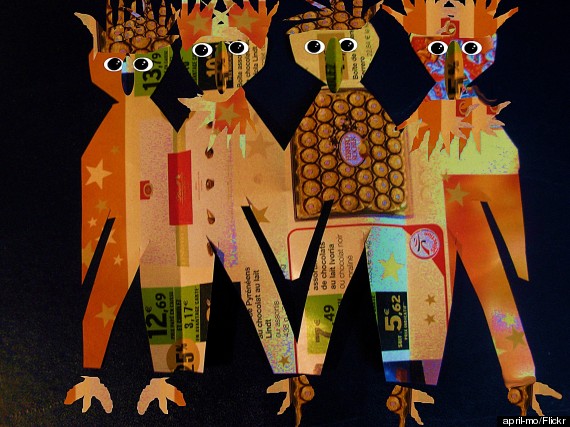
  1. Cut and paste a painting to create a collageEzArtCollage11.16.14

    “Create a painting on a material like paper or cardboard. When you’re finished, cut or tear it up. Then use the pieces as building blocks for a new artwork — a collage. See how your original artwork transforms into something new and exciting, something unpredictable. This exercise illuminates the close proximity between creation and destruction, encouraging us to take risks to push ourselves creatively and in other aspects of life.”  

    There is no obligation to share images of your finished healing art activities.  However, you are welcome to do so in this thread or in a private message for possible inclusion in the Art By Survivors portion of the Art For Arachnoiditis Project public exhibition. Be sure to specify if you would like to be named or remain anonymous at the exhibition. Here is the Project Registration Form .
E-Z Art Therapy Ideas #1

It is freezing out here…and supposed to get colder. It seems like a good time to start a series to help cope with winter confinement.

This series of healing art activities begins with

10 Easy Art Therapy Techniques To Help You De-Stress

The Huffington Post  | By Priscilla Frank

“Art therapy is a form of therapy that encourages creativity and self-expression as vehicles to reduce stress, improve self-esteem, increase awareness and help remedy trauma. While many other forms of therapy depend on verbal language to express feelings and overcome personal obstacles, art therapy allows for other, more abstract forms of communication. This tactic makes room for elements of the subconscious that perhaps are not yet ready or able to be verbalized come to the surface.

You do not have to be an artist to enjoy the benefits of art therapy. In fact, most of the exercises rely not on the final product you create but on the therapeutic, meditative ritual of the creative process. If you’re intrigued by the process of relaxation through artistic imagination, we’ve compiled a starter kit to get you on your way.

The following suggestions are simple ways to explore your inner creative voice while turning off the negative influences that so often get in the way. They may not all work for you, but hopefully one or more of the following techniques will serve as the artistic equivalent of a long, hot bath.”

FIRST ACTIVITY

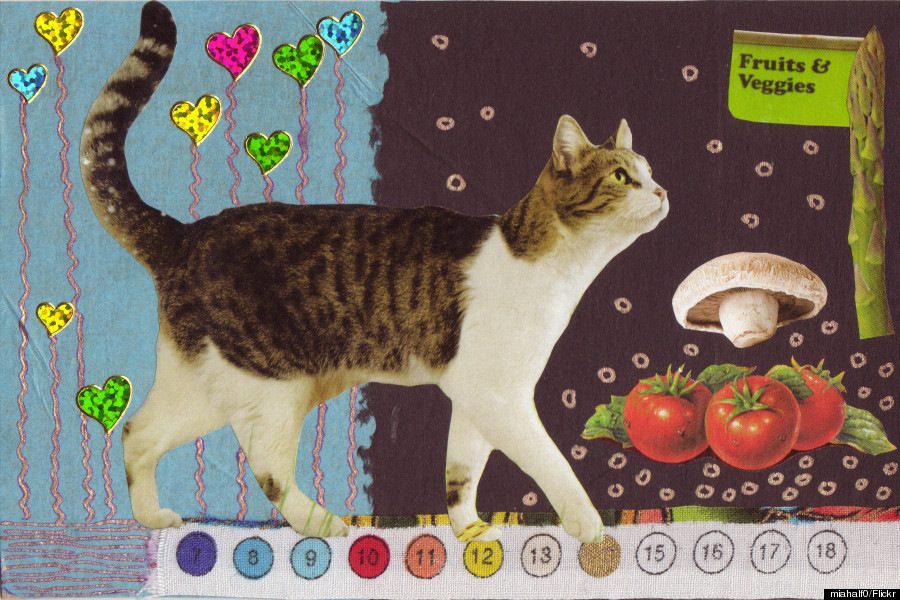
  1. Design a postcard you don’t intend to sendEzArtPostcard11.13.14

Whether it’s a love note to someone you’re not ready to confess your feelings to, or an angry rant you know is better left unsaid, sometimes enumerating all the details helps deflate the issue at hand. While writing the text can be therapeutic in its own right, designing the postcard gives even more value to the object. It also allows you to activate different portions of your brain while relaxing in a manner similar to coloring in a coloring book. Once you toss that signed and sealed letter in the trash (or tuck it away in a drawer), you’ll find its message has lost some of its power.”

There is no obligation to share images of your finished healing art activities.  However, you are welcome to do so in this thread or in a private message for possible inclusion in the Art By Survivors portion of the Art For Arachnoiditis Project public exhibition. Be sure to specify if you would like to be named or remain anonymous at the exhibition. Here is the Project Registration Form .
I originally saw the article in my news feed from The Art Therapy Alliance.

Downsizing to Bonzai

OLYMPUS DIGITAL CAMERA

[First Maple 2008]

I have always been sort of a nature nut. Long walks in the woods and along country roads and growing foods and flowers have been a source of great joy and peace for the majority of my life.

Although I made extreme efforts to continue gardening in my Sherman Street Garden after arachnoiditis, eventually, it became evident that I would have to reduce the scale of my ambitions. In 2008 I was searching for a hobby for my father who was recovering from surgery. I came across a book in the library that was all about using Native Indigenous trees as Bonzai trees.  Although my father browsed through the book, it wasn’t really something that interested. He had every intention of resuming all of his usual hobbies and activities.

For me, this was a wonderful lead in to an artistic gardening strategy that did not demand too much from my body but gave some relief for the stress  and frustration of my arachnoiditis-burdened mind.

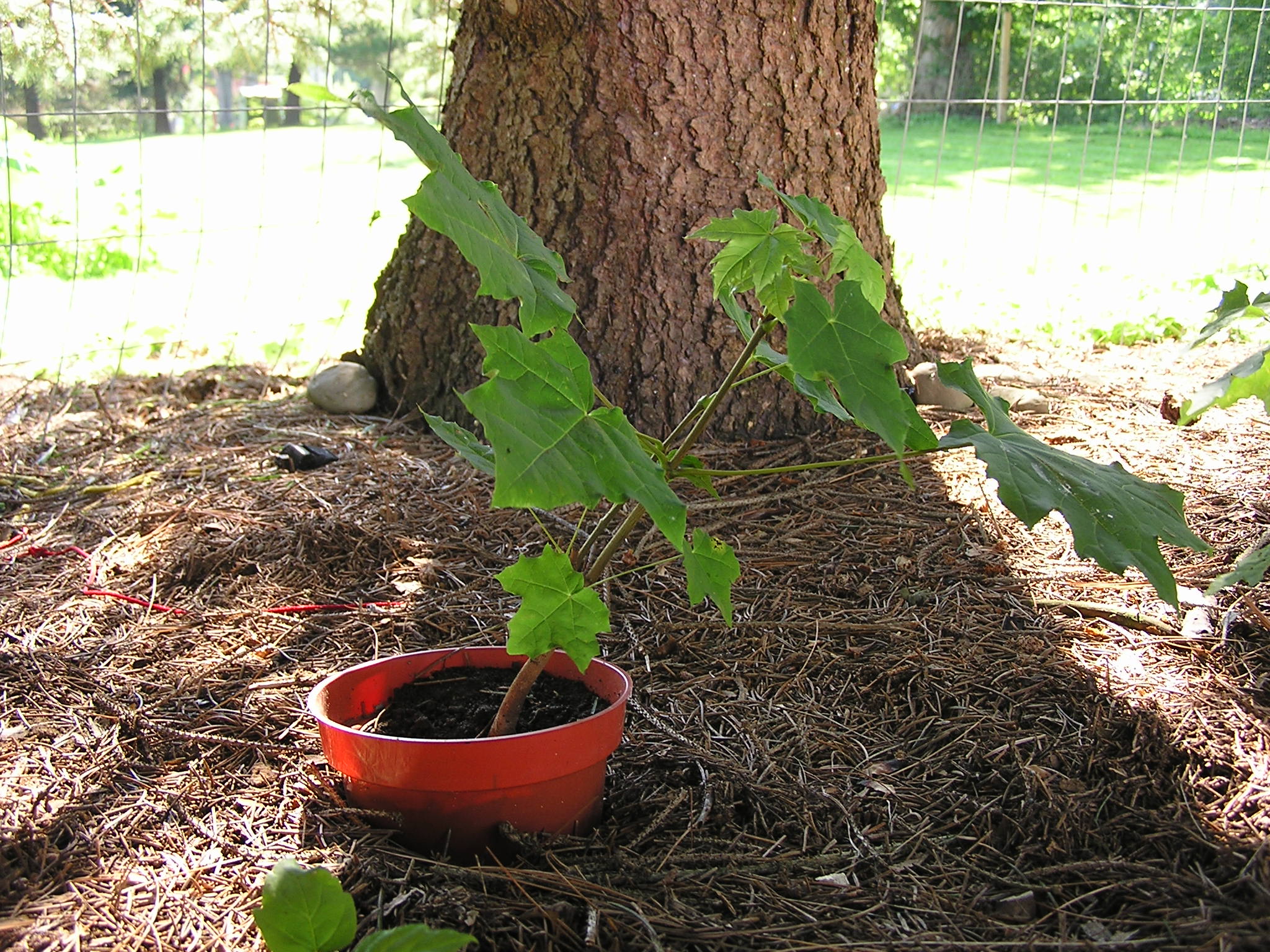
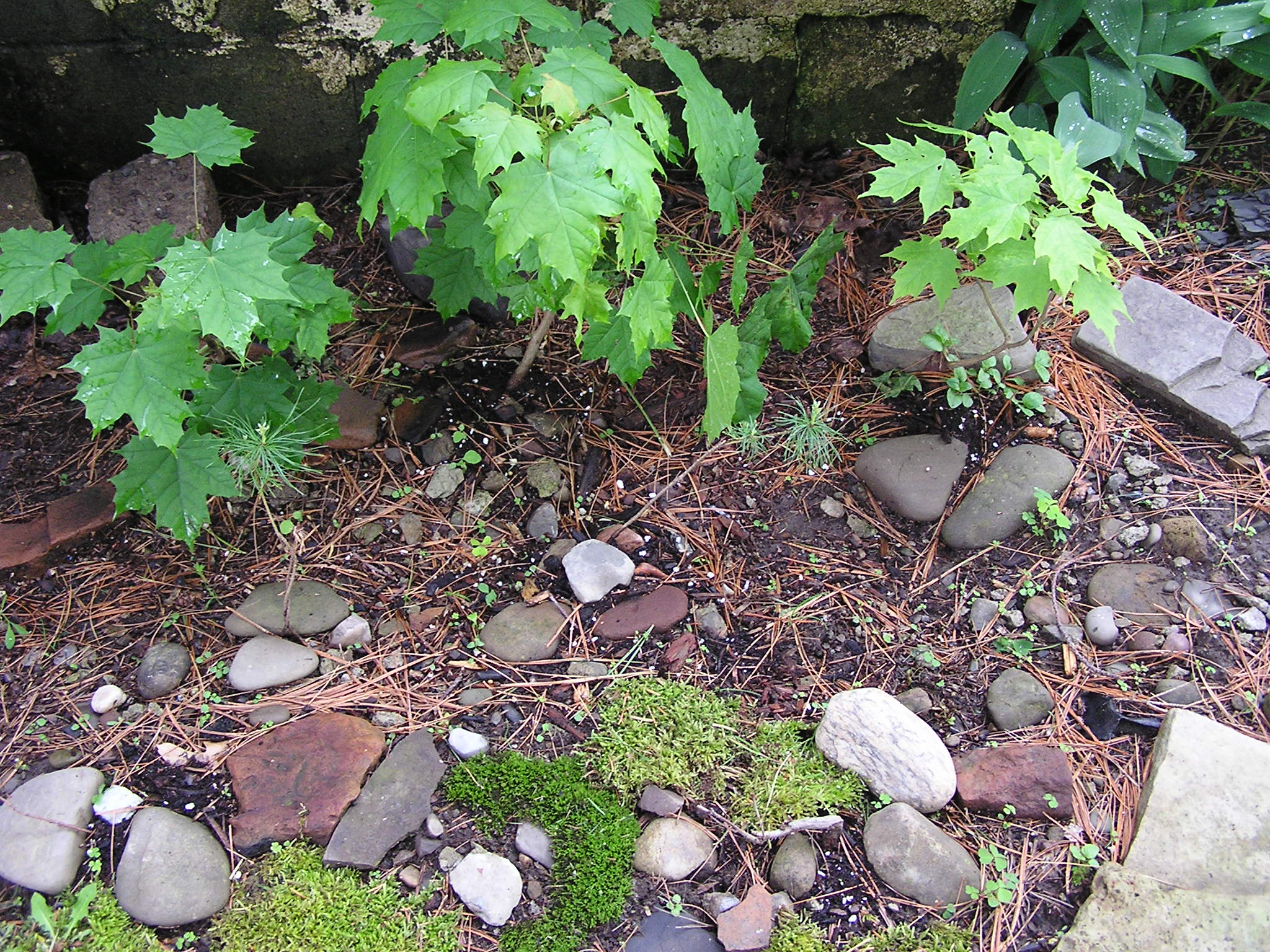
A short early spring stroll around the boundaries of my yard revealed numerous seedlings. I selected three maples and three pines. With a small gardening shovel I loosened them from the soil and put them in small pots to move closer to the house. Sheltered on the side of the garage, this was all that I had to do for the first season.

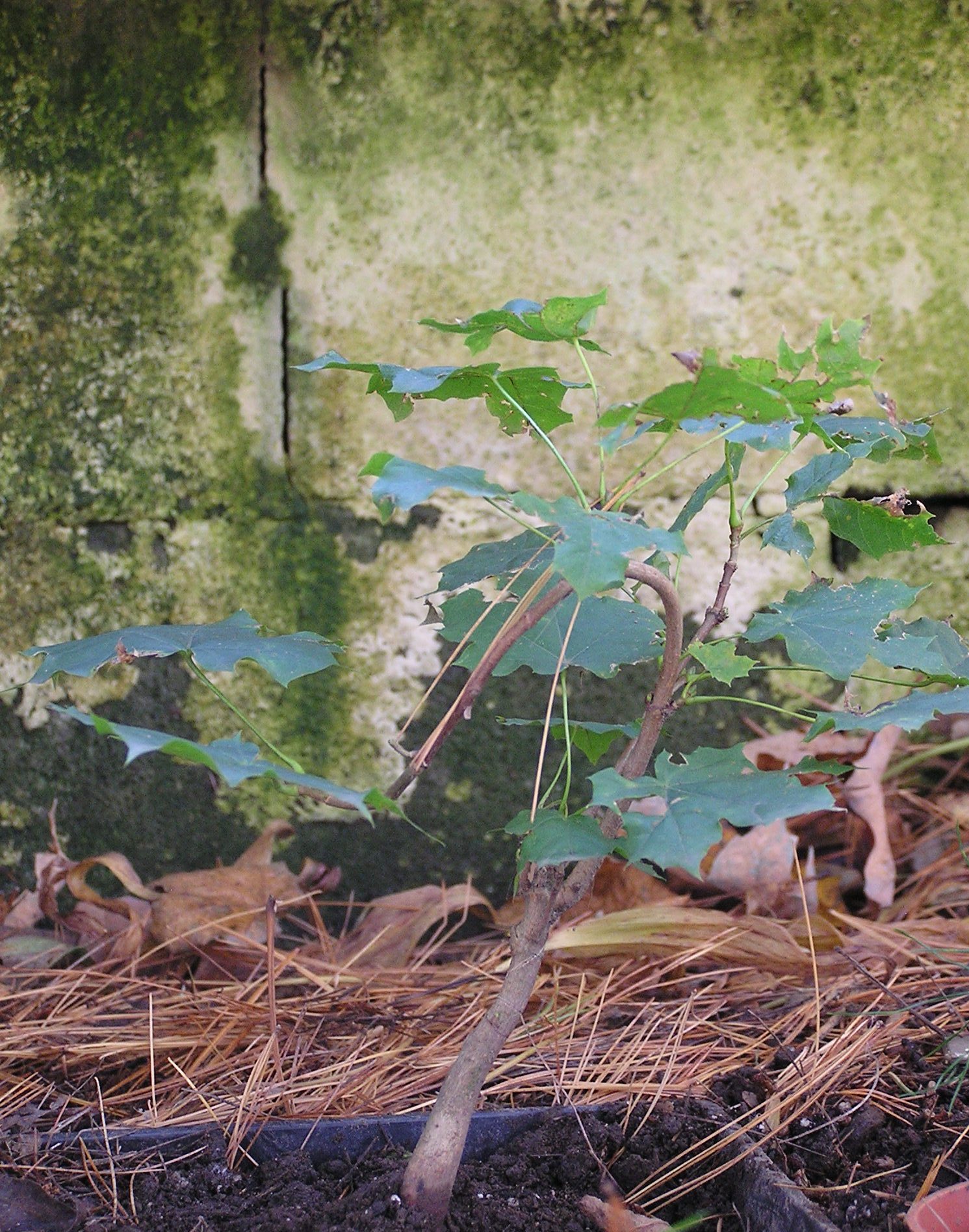
In the fall, I trimmed the tap roots (maples) back and placed a small flat stone under the roots of all of the tiny trees. I returned them to the soil and watered them. The flat rock underneath helps the roots to spread and keeps them from getting too wet. Trimming the tap root helps to stunt the growth of the tree. Although I did have some guilt about “stunting” anything on purpose at that time, this feeling eased with the knowledge that I was cultivating a companion which would otherwise have been eliminated due to its location related to the established foliage around the yard.

Every spring and fall I repeated these steps and mulched them heavily to protect them from the hardships of winter in upstate NY. The first year I used fallen leaves as mulch. The second, I used leftover mulch from my neglected flowerbeds. When I left my large three story house for a more manageable property near my pain clinic, it was not difficult to bring these potted trees with me.

OLYMPUS DIGITAL CAMERA[Same Maple, age 4 years]

Moving Day
Moving Day

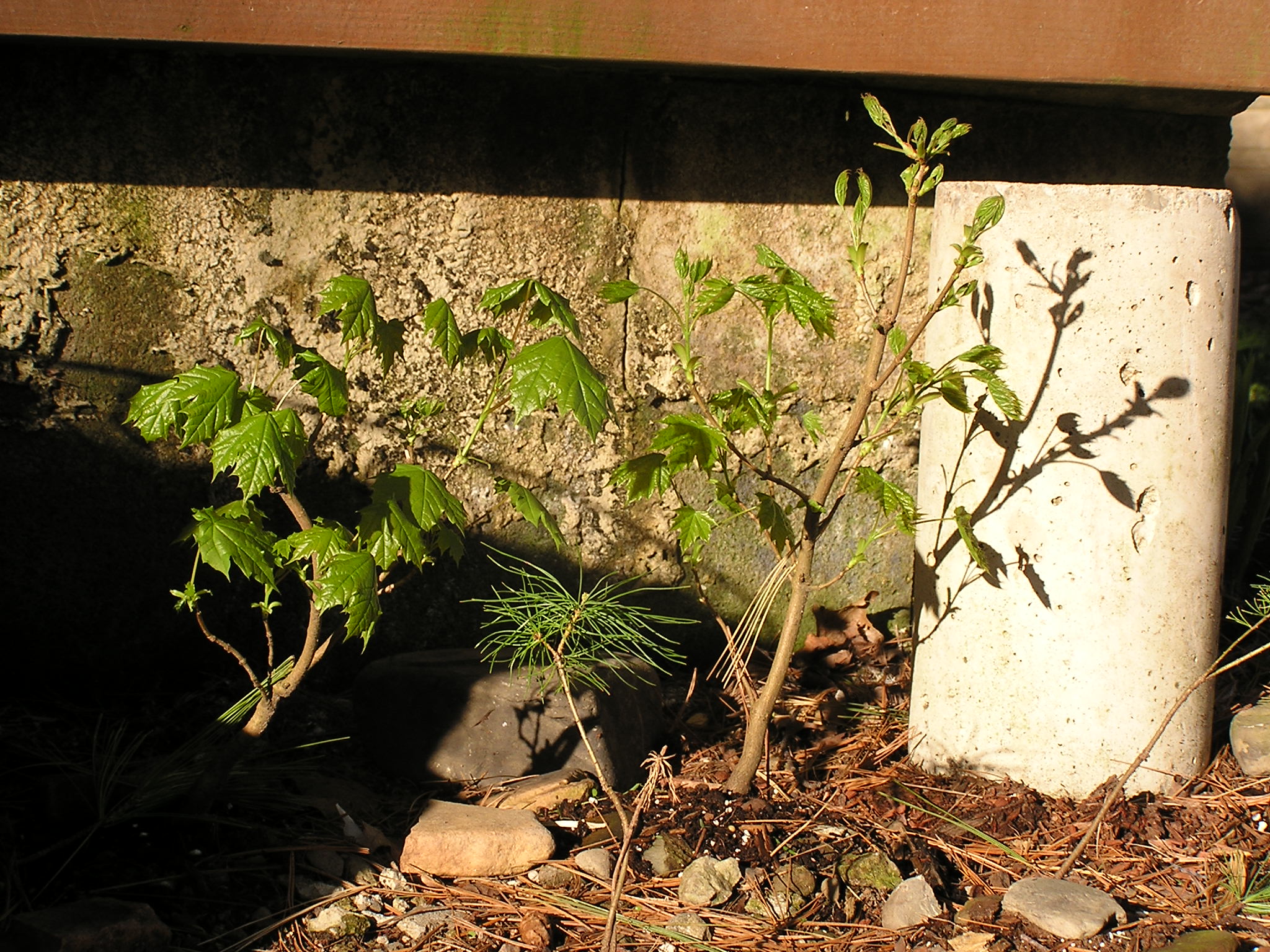
OLYMPUS DIGITAL CAMERA [same maple, Spring 2014]

I have since collected other samples to add to my Bonzai garden. Each spring I trim the new leaves and branches to create a shape and form that I find aesthetically pleasing. I do make an effort to mimic the natural shape of the larger version of each type of tree but, sometimes, the artist in me sees something different.

I now have the original maples and an assortment of evergreens and two oaks that I found on brief walks in the woods. I have a small map of each new tree, type, and the date it was found and transplanted. Although I haven’t read anything to confirm it, I believe it is best not to do anything to the roots or “branches” of the oaks until the second year. For all of the samples, it is best to trim and shape new growth while it is still green to minimize the scarring on the surface of the tree. These trees are quite resilient and these markings heal over fairly quickly when done correctly. The trimming process helps to stimulate new growth of small leaves. Trimming the roots also helps to keep the size of the leaf in proportion with the size of the tree. Otherwise, the natural-sized leaf will appear and seems ginormous in comparison to the rest of the tree.

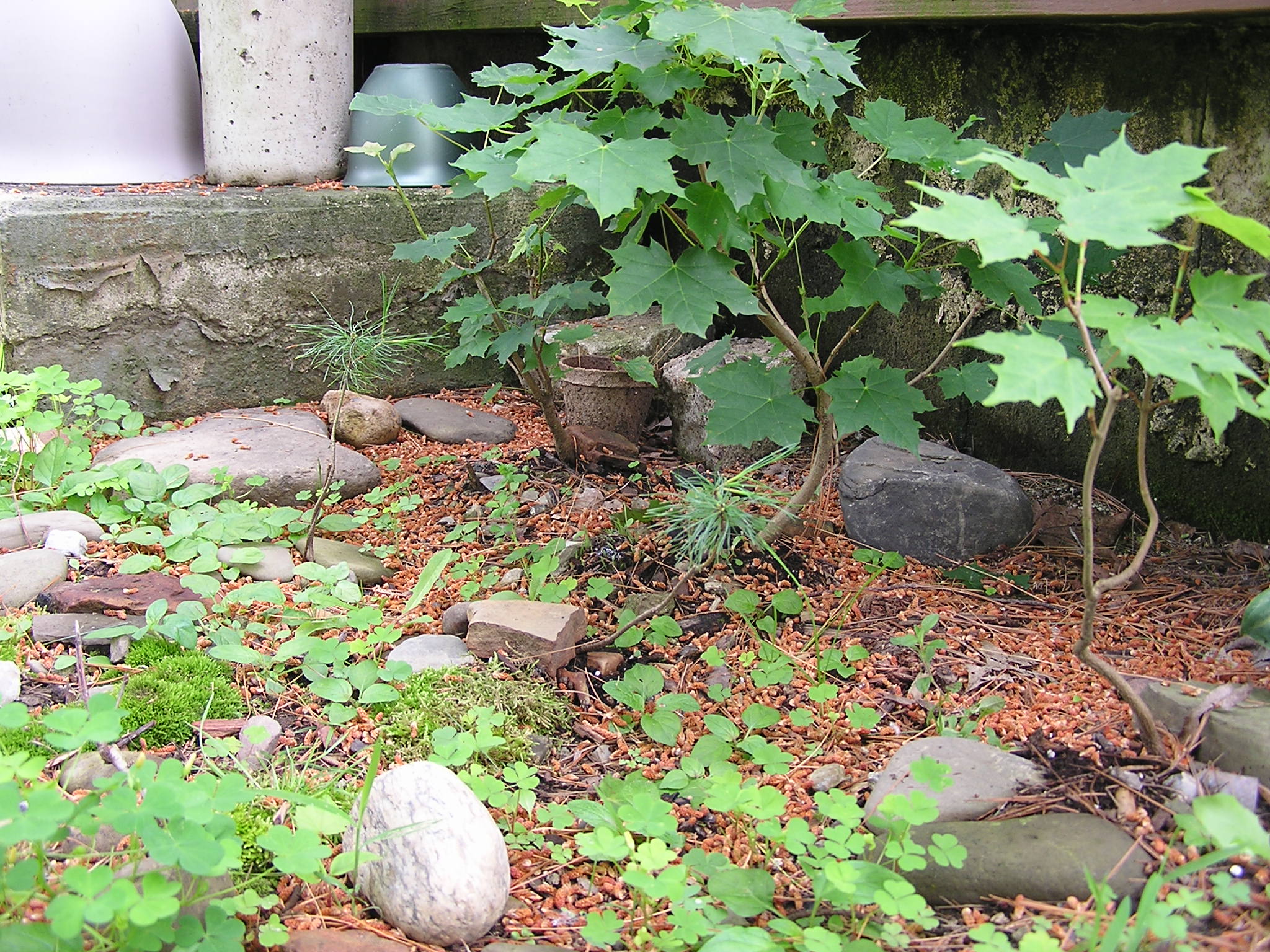
OLYMPUS DIGITAL CAMERA

OLYMPUS DIGITAL CAMERAWhen I have the ability and opportunity to spend time in nature, small rocks and stones seem to find their way into my pockets. Overtime, I have added these and some moss from the yard into my Bonzai garden. All of the indigenous trees in the garden still show seasonal changes. As fall temperatures drop and the pain in my body increases, I can simply sit on my back step and enjoy the vibrant reds and oranges of my mini maple trees.


Mandalas ~ A Good Place to Start Healing with Art

(c) sheila l. kalkbrenenr
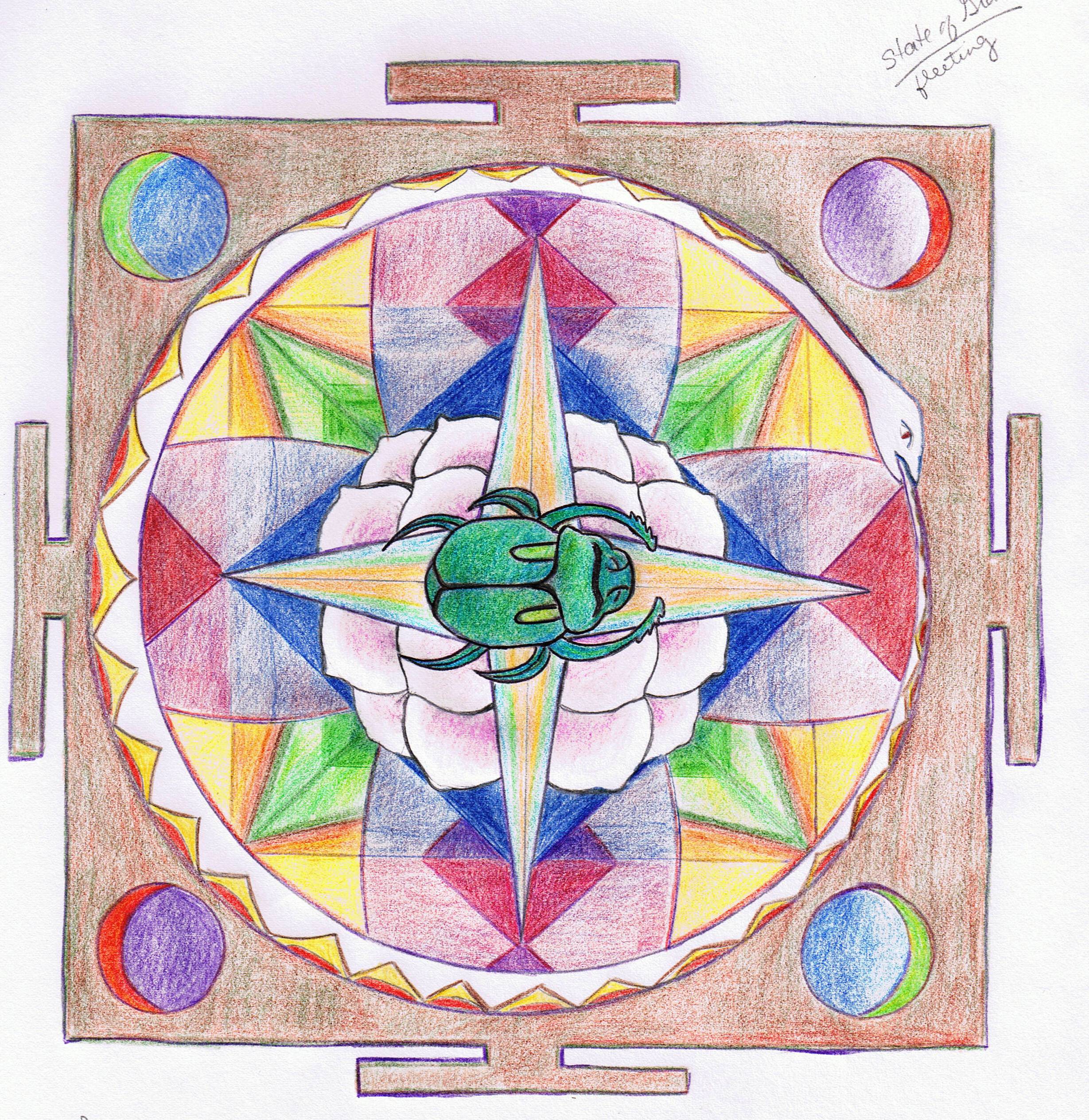
“When I began exploring the healing power of  drawing Mandalas, I was actually quite surprised at how consuming and distracting they could be. I kept them at a manageable size (6″ x 6″ so that they could be worked on while I was using my ostrich cot.” ~slk

“Today, mandalas are entering into medicine as a healing tool. Researchers and many physicians suggest that meditation can help to boost the immune system, reduce stress, combat depression, lower blood pressure and help to promote restful sleep.” ~ From the Xinalani Retreat Blog: http://www.yogaretreatsinmexico.com/2010/12/color-your-way-to-calm.html

You can draw your own mandala(s) or color in designs created by other people for this purpose. They can be as complicated or as simple as you need them to be.

by Maureen Frank The Mandala Lady
by Maureen Frank
The Mandala Lady June 2014  http://mandalaofthemonth.com/2014/06/

You might also like: Introduction to the Healing Powers of Mandala Coloring Pages